Discover the meaning of Canang Sari, Bali’s daily offering. Learn its symbolism, cultural importance, and how to experience authentic Balinese culture with a local guide.
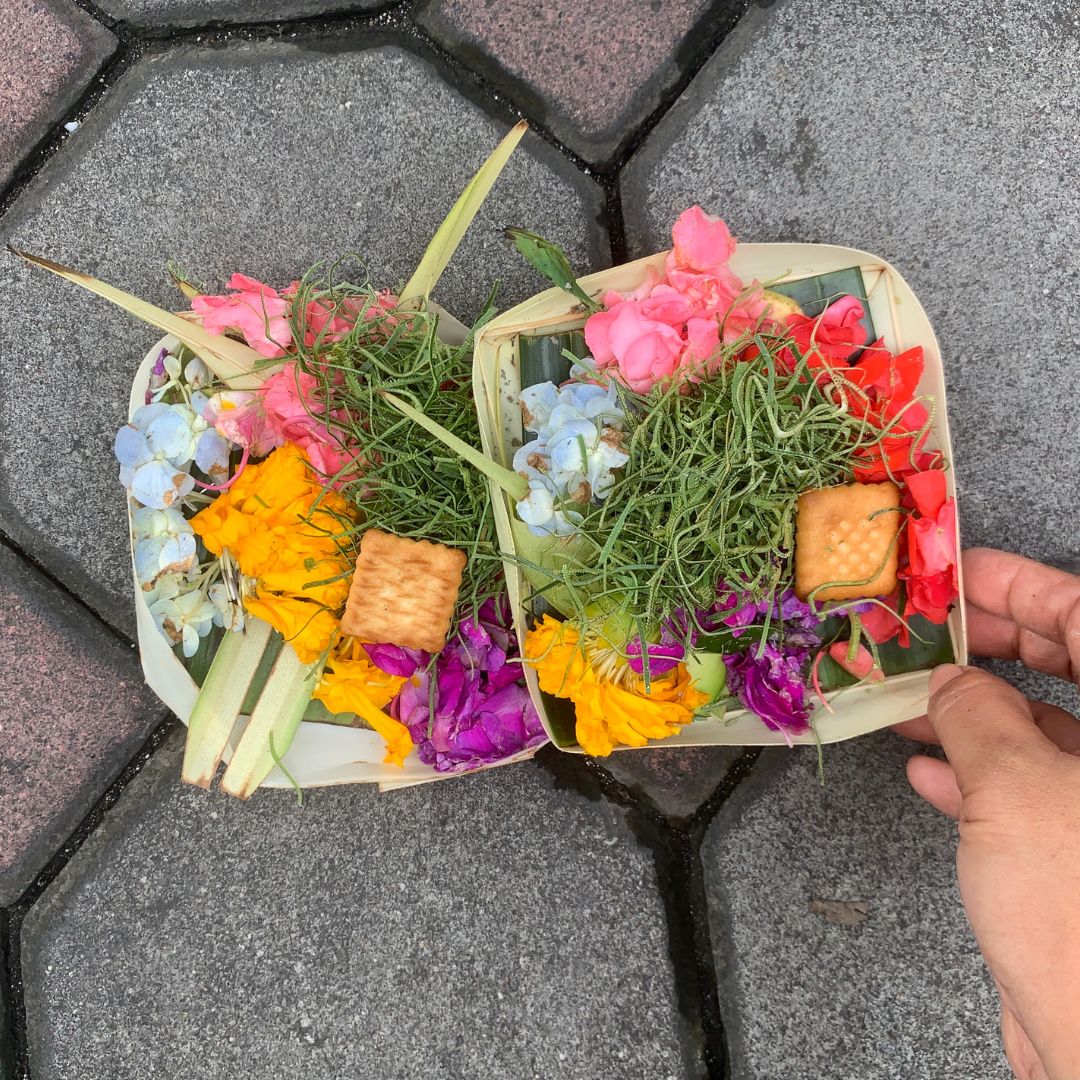
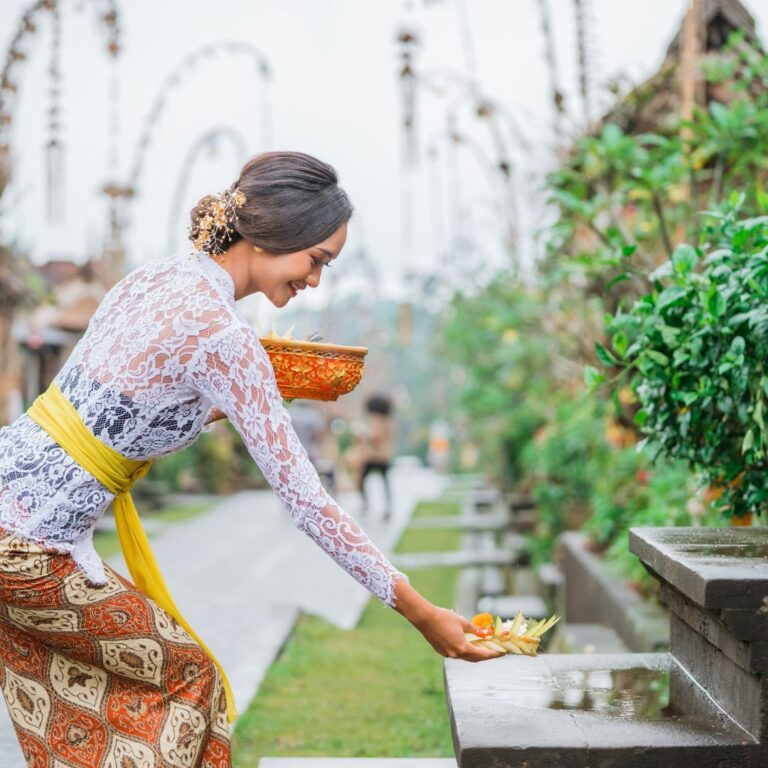
If you’ve ever walked through the streets of Bali—especially in Ubud—you’ve likely noticed small, beautifully সাজ সাজ offerings placed on sidewalks, temple entrances, and even on motorbikes. These are known as Canang Sari, an essential part of Balinese Hindu culture.
While they may look simple at first glance, these daily offerings carry deep spiritual meaning and reflect the island’s unique philosophy of harmony and gratitude.
🛕 What Is Canang Sari?
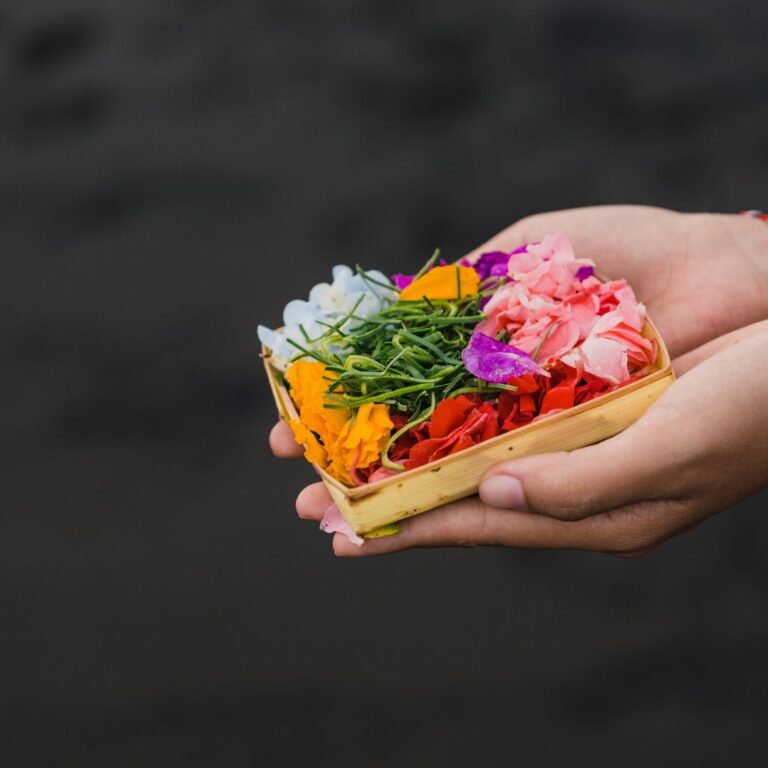
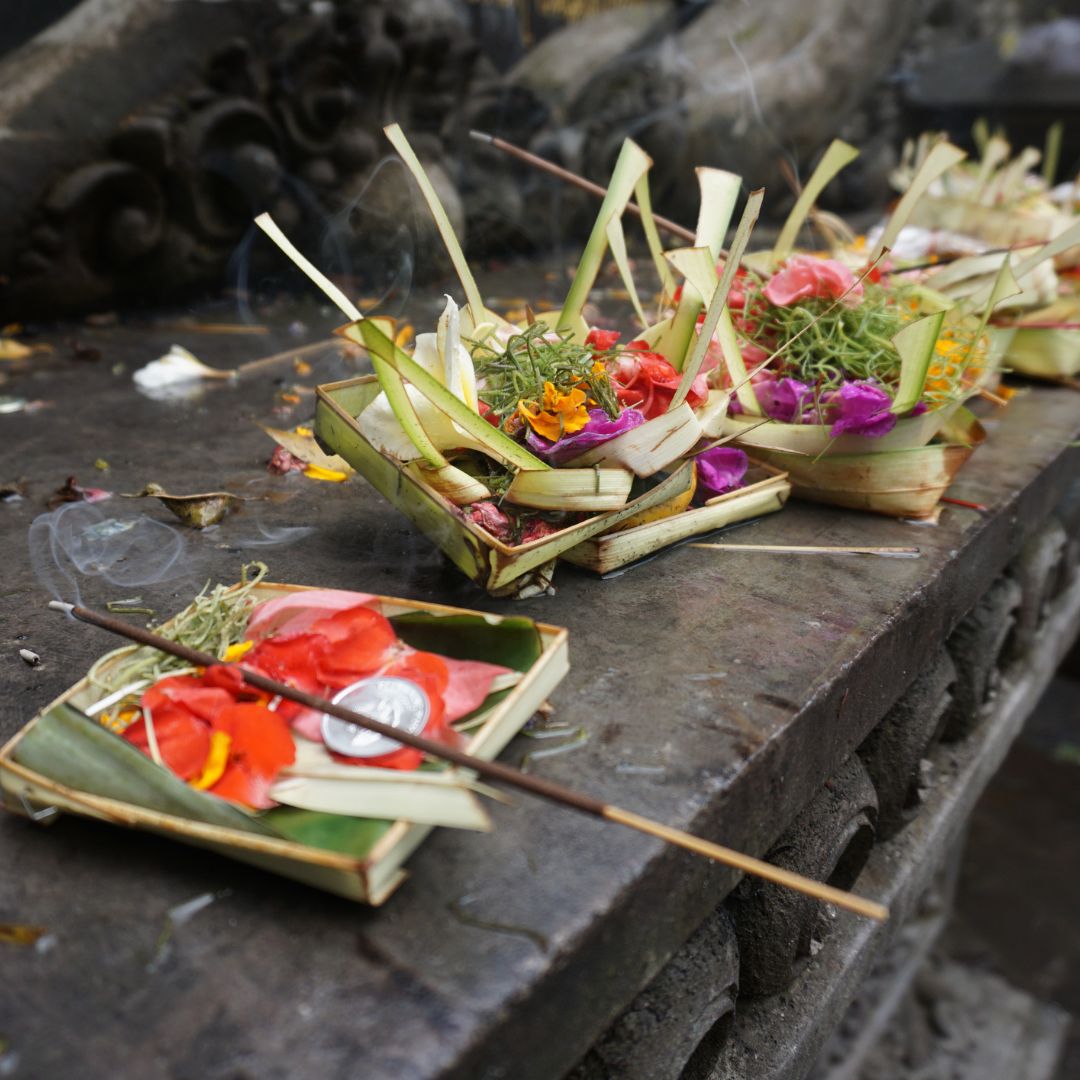
Canang Sari is a small offering made from palm leaves, filled with flowers, incense, and sometimes food or small items. Balinese Hindus prepare and present these offerings every day as a form of prayer and devotion.
The word itself has meaning:
- Canang refers to the container made from coconut leaves
- Sari means essence or sincerity
Together, it represents a sincere offering given with a pure heart. Each part of a Canang Sari is carefully arranged and carries symbolic meaning:
- Flowers
Different colored flowers represent Hindu gods and directions:- White (east) for purity
- Red (south) for energy
- Yellow (west) for prosperity
- Blue/green (north) for balance
- Incense (Dupa)
The rising smoke symbolizes prayers being sent to the gods. - Offerings (Food or Coins)
A gesture of gratitude for blessings and prosperity.
This daily ritual is deeply connected to the Balinese philosophy of Tri Hita Karana, which teaches the importance of maintaining balance between humans, nature, and the divine. Rather than separating religion from daily life, the Balinese integrate spirituality into everything they do, and these offerings are a perfect reflection of that mindset.
One of the most remarkable aspects of Canang Sari is how present it is everywhere. You will find them at the entrances of homes, along busy streets, inside shops, and in temples such as Pura Taman Saraswati. They are placed not only in sacred spaces but also in ordinary places, showing that spirituality exists in every part of life.
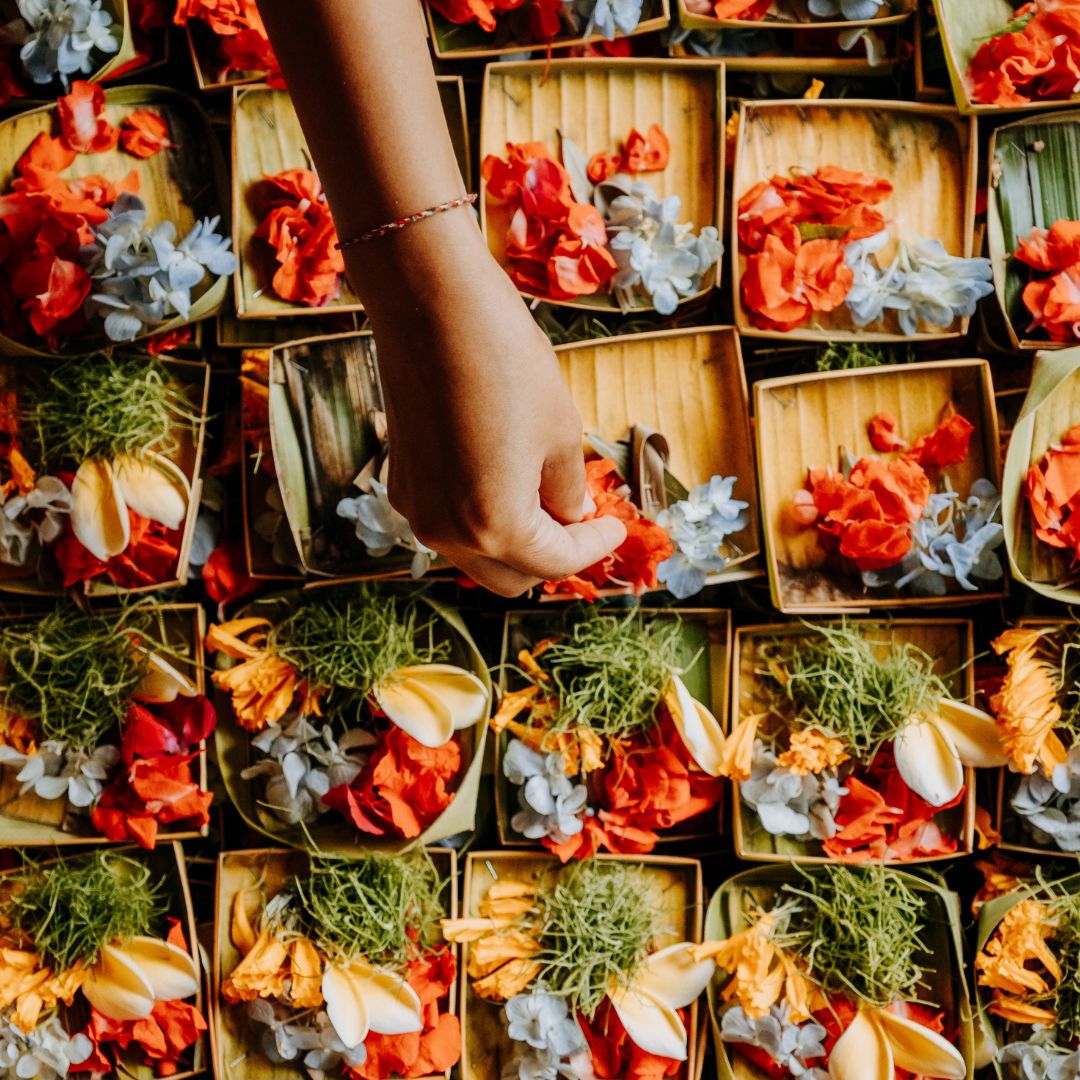
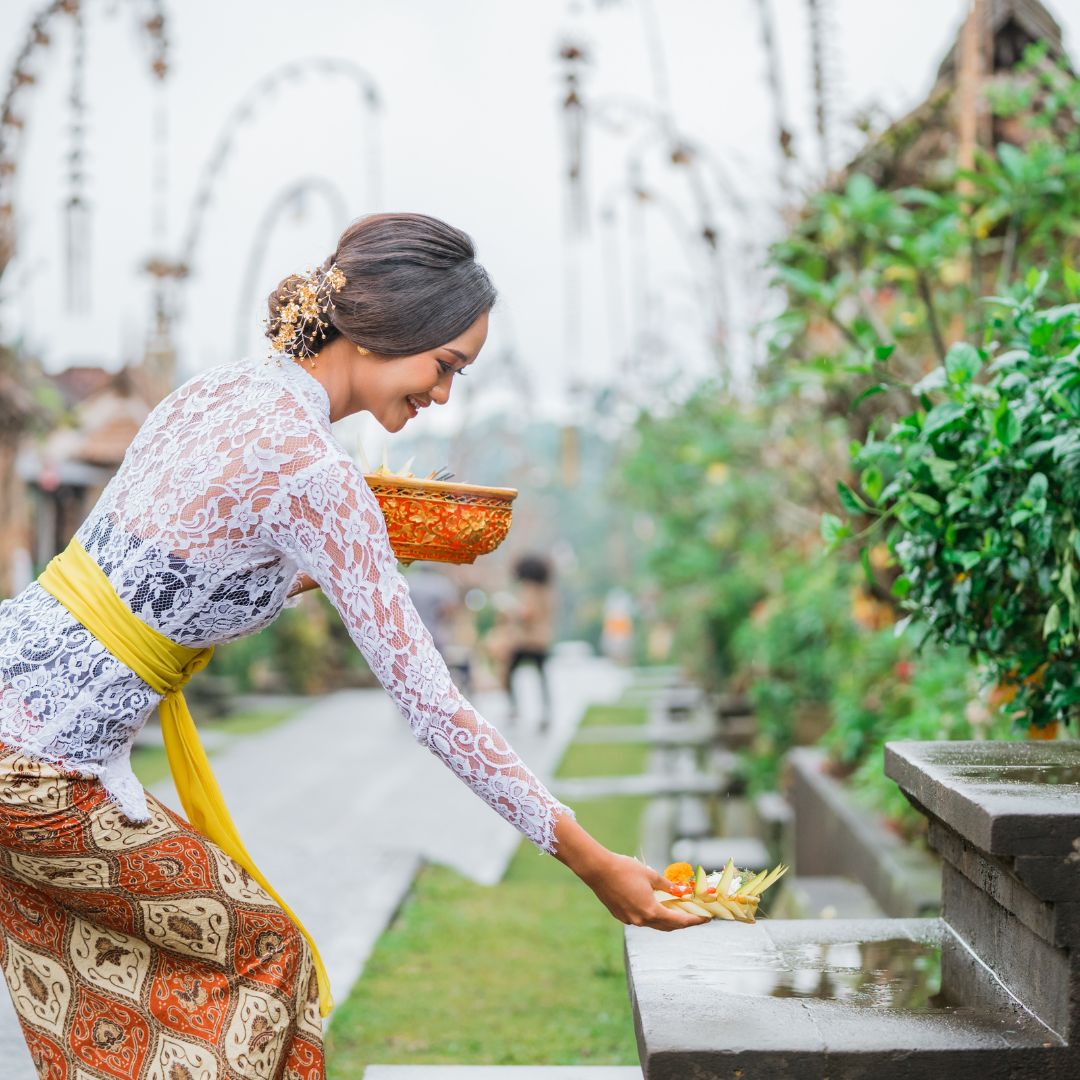
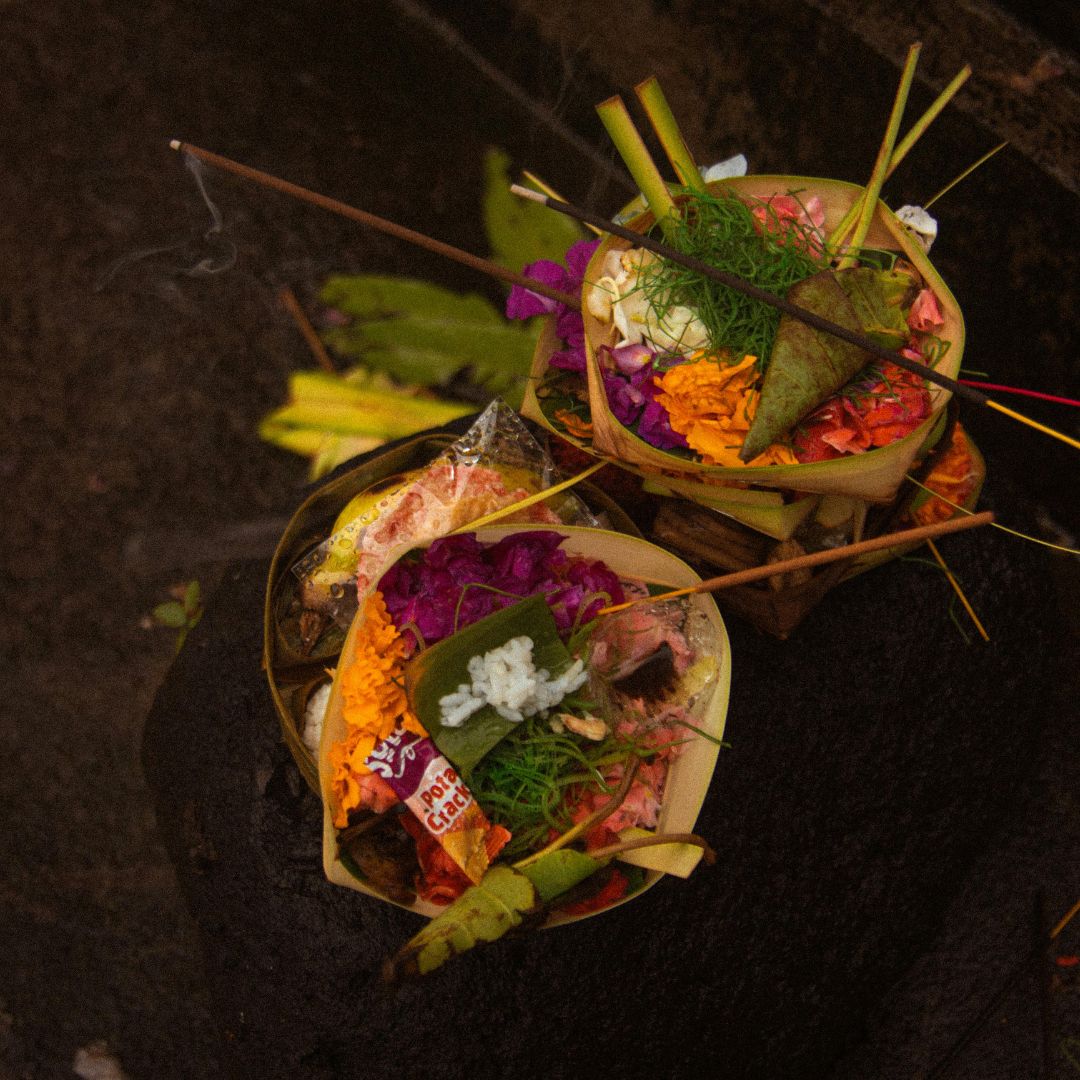
Beyond their visual beauty, Canang Sari represents a way of life. Every morning, you can see Balinese women carefully preparing and placing these offerings, often dressed in traditional attire. The process itself is a form of meditation—an act of mindfulness that starts the day with gratitude and intention.
⚠️ Respecting Local Culture: What Travelers Should Know
While Canang Sari is beautiful, it’s important to respect its sacred purpose.
Here are simple etiquette tips:
- Do not step on or kick the offerings (even accidentally—be mindful while walking)
- Do not touch or move them
- Observe respectfully, especially during prayer times
Understanding these small cultural details can make your travel experience more meaningful and respectful. With a local guide you can visit temples, traditional villages, and cultural sites with a deeper perspective. You’ll not only learn about Canang Sari, but also gain insight into ceremonies, rituals, and the philosophy that shapes Balinese life.
To experience this side of Bali more comfortably and meaningfully, many travelers choose to explore with a trusted local service like Ubud Good Travel. With a private driver and personalized itinerary, you can discover cultural highlights at your own pace while receiving authentic explanations that you won’t find in guidebooks. It also allows you to visit places beyond the typical tourist routes, giving you a more genuine connection to the island.
In the end, Canang Sari is more than just a daily ritual—it is a symbol of gratitude, balance, and spiritual awareness. It shows how the Balinese find meaning in even the simplest acts, turning everyday moments into expressions of devotion.
As you explore Bali, take a moment to pause and appreciate these small offerings. They are quiet reminders that behind the island’s beauty lies a deep cultural and spiritual foundation. And when you begin to understand that, your journey in Bali becomes more than just a holiday—it becomes a truly enriching experience.